© C.W. Newell Photography
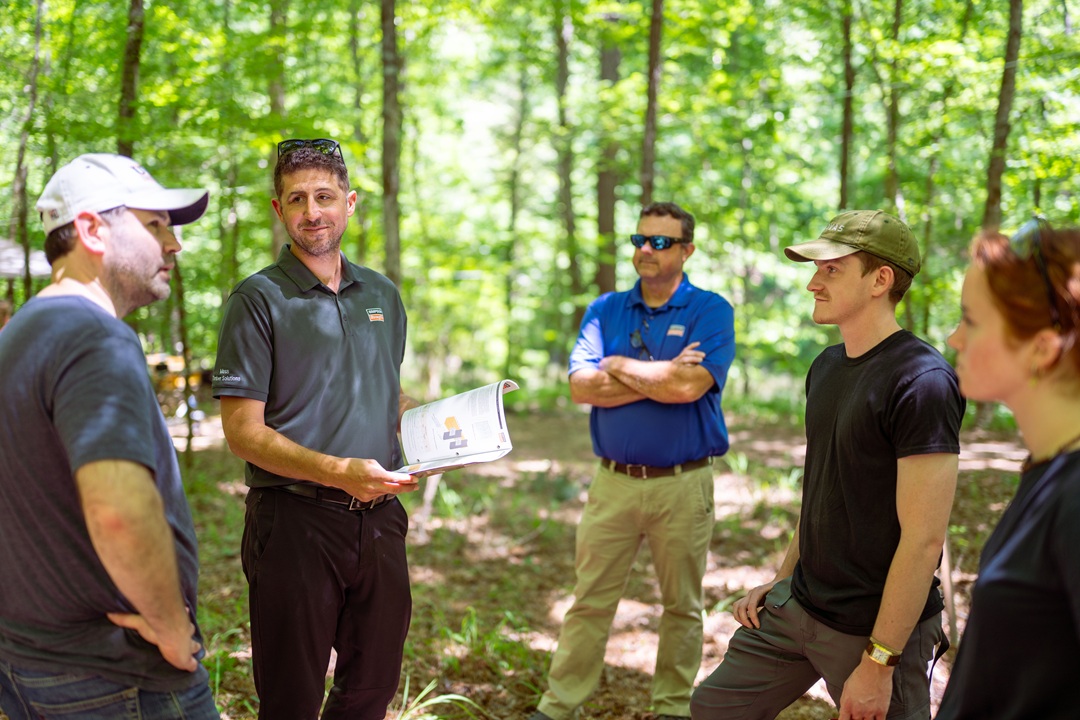
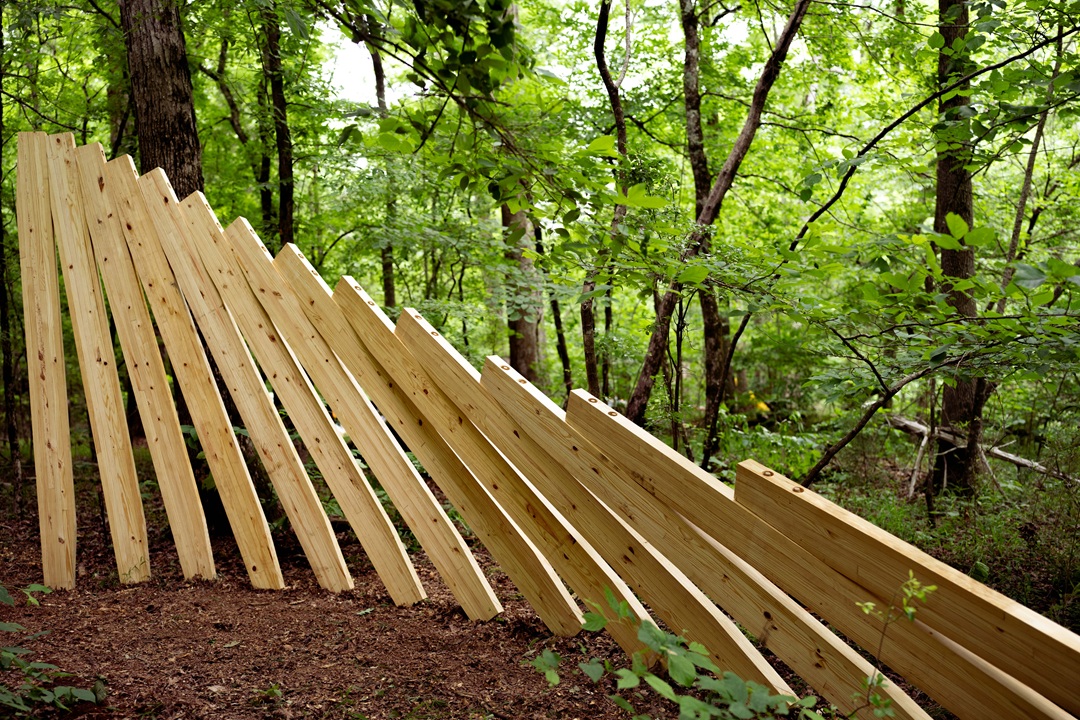
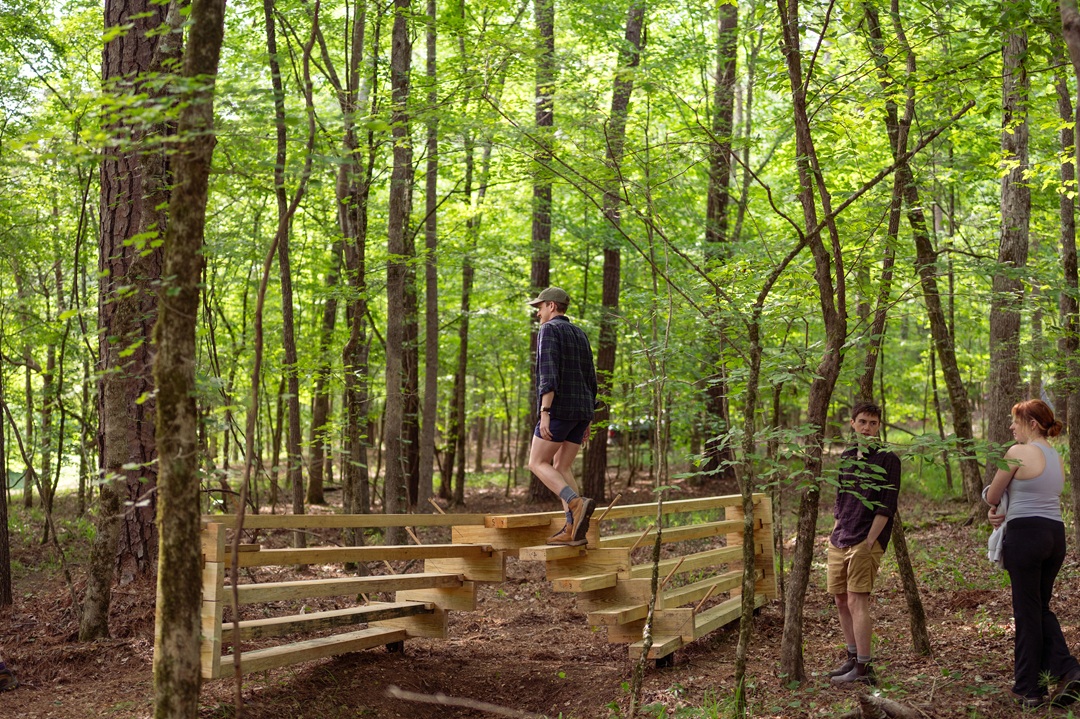
When Jason Dees, Simpson Strong-Tie OEM sales representative covering Alabama, Mississippi, Louisiana and the Florida Panhandle, picked me up from the Panama City airport, we had three days of mass timber events, meetings and presentations planned together culminating in an experience I was invited to last year, but couldn’t attend due to a scheduling conflict. I was intrigued by the idea — three teams of six or so architecture students and professionals would be spending five days and four nights in the woods alongside the Little Cahaba River just outside the city limits of Birmingham, Alabama, discussing architecture, forestry, conservation biology, among other concepts important to sustainability, wood and mass timber design. But more than just talking, listening and taking notes, the students participating in StickBuilt ‘25 would be building unique structures using several types of engineered and solid sawn wood products along with structural connectors and fasteners donated by Simpson Strong-Tie.
© C.W. Newell Photography
The StickBuilt experience, as I learned, is a not-for-profit event now in its second year created by the team at Stick Architecture which includes founders Will McGarity and Charlie Hunter-Cook, and it is jointly offered with their non-profit partner, Your Town Alabama. The team at Stick Architecture believes in the benefits of wood as a strong, beautiful and renewable building material. In addition to researching sustainable wood and mass timber design, Stick Architecture has completed an array of wood-based projects including a visioning package for the renovation and renewal of Cheaha State Park’s welcoming and lodging facilities in Delta, Alabama, where many Simpson Strong-Tie mass timber connectors and fasteners are being used.
© C.W. Newell Photography
According to the description on the StickBuilt website: “StickBuilt strives to cultivate an environment in which the closely-focused work of applied timber research and project execution is leavened throughout by a sense of freedom, openness, and interconnection.” Heady stuff no doubt, but the even-keeled Will and core team of practicing architects there to help run the event seemed to have the teams of students focused and assured of their future builds by the time Jason and I arrived. Will informed us that each of the three completed structures will reflect a prompt centered on the concept of time (again, heady stuff!). For StickBuilt ‘25, we donated connectors such as the CJTZ™ concealed joist tie and E-Z Spike™ fence post base for anchoring the temporary builds to the ground, as well as SWD® and Deck-Drive™ DWP Wood SS screws and RFB retrofit bolts. After our introductions, one of the teams wanted to pick our brains about the products and how they might use them in their structure. After making a few suggestions, Jason and I realized it was presentation time.
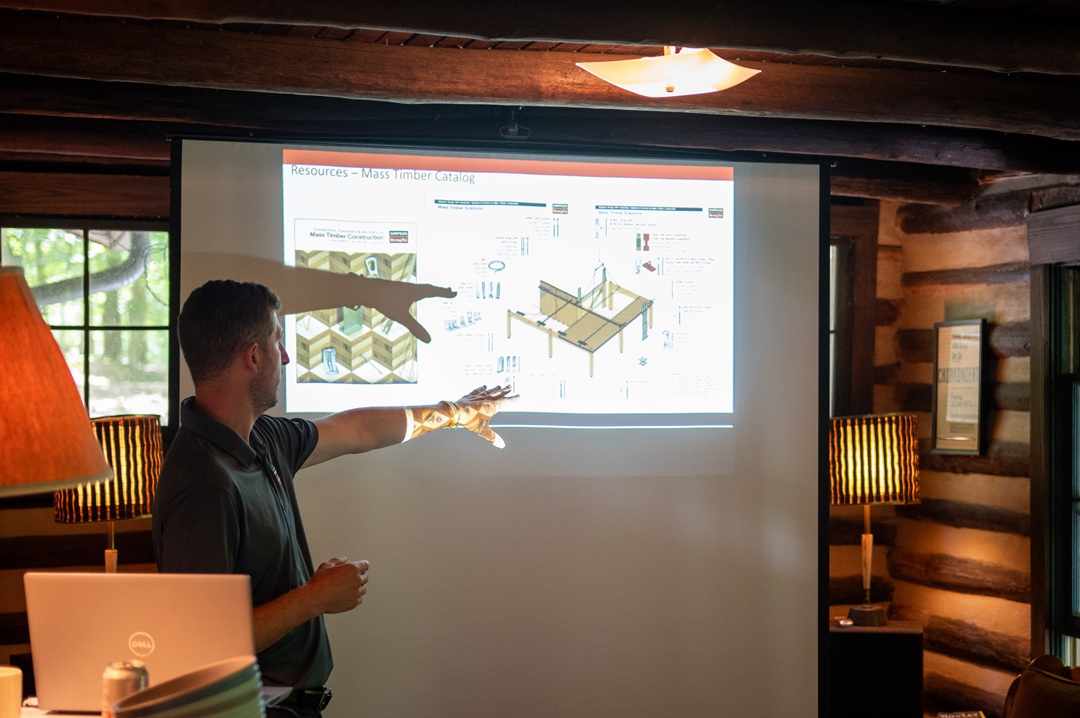
Having been with Simpson for a few years I have given presentations in a variety of settings, but this one gets the award for most rustic. The family that allows the use of their land for the event each year also makes a 1920s-era cabin on the site available for design space, presentations, and communal meals. During our mass timber presentation, the students and architects asked great questions about the variety of solutions we offer. When it was all over, I was pleased that with our donations we were able to fulfill one of Barc Simpson’s nine principles of doing business, Give Back.

While waiting for my flight back home I took a minute to reflect on the event. When I was a consulting engineer, I had been fortunate to design many building types with many materials. While they each had positives and negatives, wood design had always been one of my favorites. Not really knowing why other than that I enjoyed the engineering and calculations, it occurred to me that one of the reasons behind StickBuilt, i.e. the opportunity for freedom to evolve and create with a millennia-old building material underscored by research, is also a reason why I enjoyed wood design while consulting and still enjoy it today as a branch engineer and partner of the mass timber team at Simpson Strong-Tie. Not only is wood a once-living and renewable resource, but humans have been designing and building with wood for over a thousand years. Wood-based building designs continue to excite and change, especially in the current mass timber space where design professionals are pushing the boundaries of engineered woods and its connections. It’s exciting to be a part of team that supports those connection solutions develops new ones – which not surprisingly is one of Barc’s other principles of doing business – Risk-Taking Innovation.