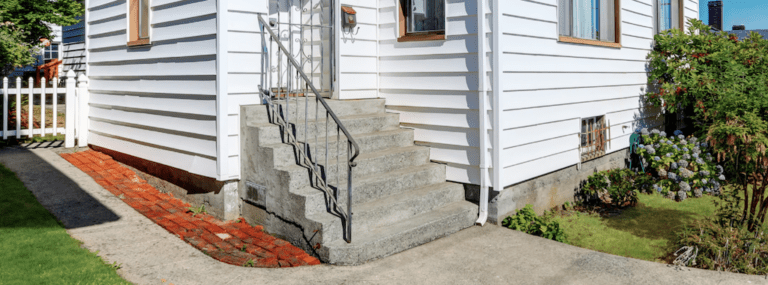
Why High Winds Should Matter to Homeowners
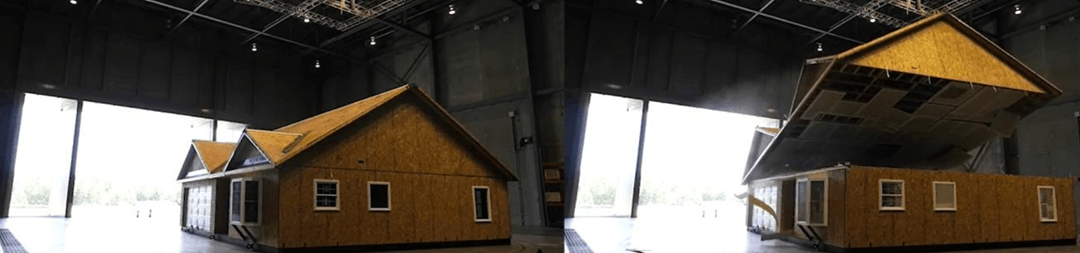
High winds are one of the leading causes of home damage during storms. One of the most common failure points is the roof-to-wall connections. When these connections fail, the roof can lift off the walls and expose the interior of the home to catastrophic damage.
Homes with reinforced roof-to-wall connections are less likely to experience catastrophic roof loss during high-wind events.
High winds don’t just affect coastal homes. Whether you live near the coast or inland, strong storms can cause serious damage — and one of the most vulnerable parts of any home is the roof.
The good news? There are practical steps you can take to strengthen your home and reduce your risk.
What Is a Roof Retrofit?
A roof retrofit strengthens the connection between the roof framing members and the walls. In states like Florida, building codes now require specific upgrades when a roof is replaced on a single-family residential home. These upgrades improve how the roof framing members are attached to the structural walls below.
The goal is simple: Help prevent strong winds from lifting the roof off your home.

How Roof Retrofits Support Homeowner Property Insurance Premium Savings
Roof retrofits can also lead to homeowner insurance premium discounts. The Florida Office of Insurance Regulation (OIR) mandates residential property insurance premium discounts be provided by insurance companies when properly installed and documented roof-to-wall connectors or structural fasteners are present and verified by an approved wind mitigation inspector.
Licensed contractors are allowed to install and must document their retrofit roof-to-wall attachment work. This documentation is essential information needed for the final wind mitigation inspection and ultimately for the homeowner to qualify for potential insurance premium discounts. Stronger roof-to-wall connections can mean lower risk, and lower risk can mean lower property insurance premiums.
Understanding the Continuous Load Path
The continuous load path is an engineered concept that, when constructed properly, ensures loads are completely transferred from the point of application to the foundation via the building’s structural components and connections. Continuous load paths are typically constructed to resist forces from gravity (downward), lateral (horizontal), and uplift (upward) loads. Connectors and structural fasteners strengthen the links between the building’s structural components and keep the load path intact.
Where Do Connectors and Structural Fasteners Fit In?
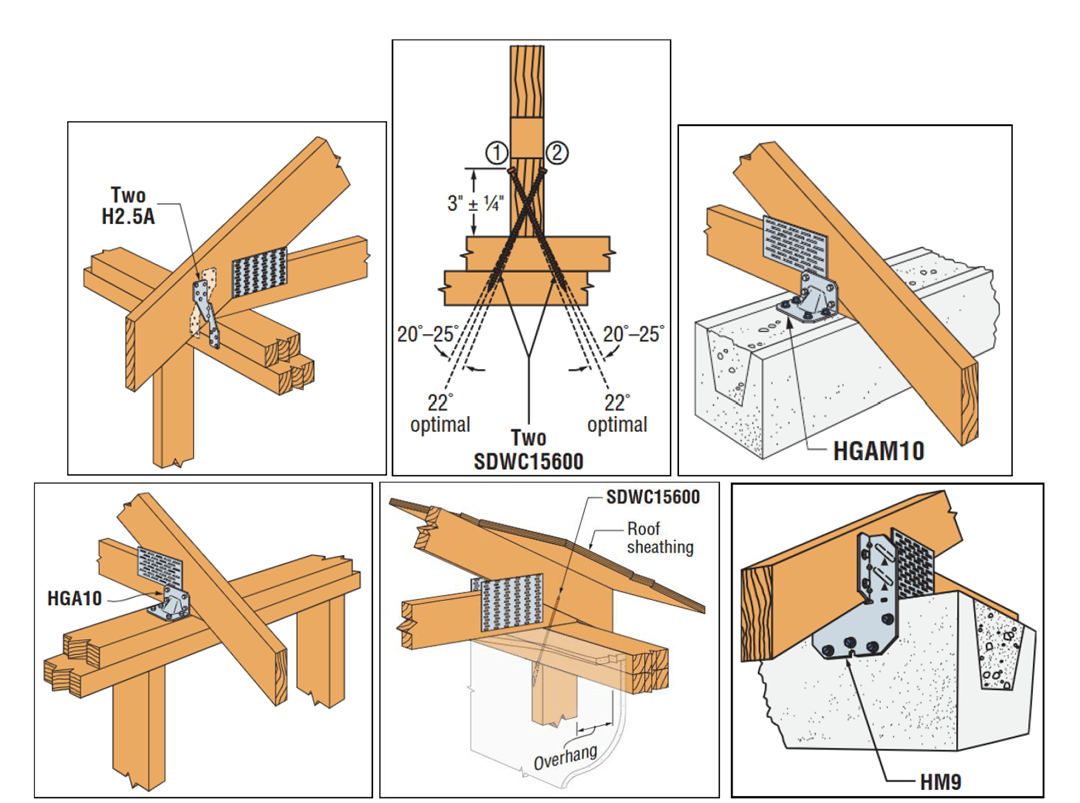
Connectors and structural fasteners like hurricane ties, fully threaded structural wood screws and heavy gusset angles strengthen the roof-to-wall connections. Manufacturers such as Simpson Strong-Tie provide these types of solutions.
How to Get Started
When considering roof-to-wall roof retrofit upgrades to your home, here is a simple path to follow:
- Schedule a wind mitigation inspection.
A qualified wind mitigation inspector, licensed contractor, architect or engineer can evaluate your current roof-to-wall connections. - Review the findings.
You’ll learn whether your home already has strong connections or if upgrades are needed. - Get professional guidance.
A licensed contractor can recommend the most practical and cost-effective solutions if improvements are needed. - Complete the retrofit work.
This will involve having a licensed contractor install the appropriate roof-to-wall connectors or structural fasteners and provide all required site-specific documentation for the materials installed and proof of proper installation. - Complete the final wind mitigation inspection.
Final inspection to be done by an approved wind mitigation inspector. Providing the inspector with the proper documentation is essential for inspections and insurance qualification. - Submit the documentation to your insurance provider.
This is the final step to potentially qualify for property insurance premium discounts.
Are There Programs That Can Help?
Programs such as the My Safe Florida Home program offer financial assistance for inspections and retrofit improvements. This program is designed to help homeowners implement preventive action before storm damage occurs.
Why It’s Worth Considering
Retrofitting your roof-to-wall connections is a practical step that can:
- Strengthen a critical part of your home
- Reduce the risk of storm-related damage
- Potentially qualify you for insurance premium discounts
High winds are unpredictable, but preparation is within your control. Strengthening your roof-to-wall connections is one of the most direct ways to better protect your home and your investment.
Learn more about the Florida Office of Insurance Regulation’s Uniform Mitigation Inspection Form on our SE blog here.
Learn more about Simpson Strong-Tie Products for Florida Wind Mitigation Retrofit When Reroofing solutions on Simpson’s website here.